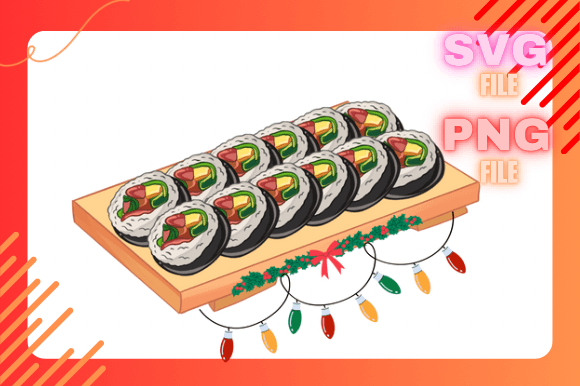
Christmas Sushi: A Designer’s Real-World Embroidery Review
As a designer who spends more time staring at stitch simulations than I do sleeping, I have learned to be skeptical of novelty concepts. The intersection of holiday cheer and Japanese cuisine is not exactly a traditional pairing. However, when I first loaded the Christmas Sushi file into my software, I was immediately struck by its playful absurdity. It is not just a gimmick; it is a well-executed piece of visual humor that bridges two distinct cultural aesthetics. For embroidery designers, small business owners, and Etsy sellers looking to break away from standard snowflake motifs, this design offers a refreshing alternative. But does it hold up under the needle? Let’s dig into the practical realities of stitching this unique illustration.
First Impressions: Mood and Visual Personality
The initial appeal of Christmas Sushi lies in its whimsical contrast. We are accustomed to seeing red and green in traditional holly patterns or Santa suits. Here, those colors are recontextualized through the lens of sushi rolls, sashimi, and perhaps a festive wasabi garnish. The mood is lighthearted, modern, and slightly ironic. It appeals to a demographic that enjoys pop culture mashups and unconventional holiday decor.
From a layout perspective, the design feels balanced. The shapes are distinct enough to remain recognizable even when scaled down, which is crucial for embroidery. Unlike some overly complex Illustrations that lose their charm when converted to thread, this design relies on bold shapes and clear color blocking. This suggests that it will translate well to various machine embroidery design applications without becoming a muddy mess of tangled threads.
Real-World Application: Where This Design Shines
I recently tested a similar concept on a canvas tote bag design for a local boutique client. The result was surprisingly effective. The sturdy fabric provided the necessary stability for the fill areas, allowing the colors to pop. This experience highlighted where Christmas Sushi truly excels: casual, lifestyle-oriented products.
- Custom Apparel: Imagine this stitched onto the pocket area of a denim jacket or the chest of a neutral-toned sweatshirt. It serves as a conversation starter, perfect for sweatshirt embroidery that aims to be quirky rather than solemn.
- Holiday Gifts: For the friend who loves both ramen and reindeer, this makes an ideal personalized gift. It works beautifully on kitchen towels or aprons, adding a touch of humor to holiday cooking.
- Patches and Pins: Because the design has strong outlines, it would make an excellent embroidered patch. Patches are a high-margin item for Etsy sellers, and a unique theme like this can help a small shop product stand out in a saturated market.
The versatility of this digital embroidery file means it can anchor a entire collection. You could pair it with other food-holiday mashups to create a cohesive line of design assets for your craft business. It is not just a single image; it is a brand statement that says you do not take yourself too seriously.
Technical Considerations and Stitching Performance
While the concept is fun, the execution requires careful attention to detail. When evaluating any applique design or filled illustration, we must consider stitch density. If the design uses heavy fill stitch areas for the rice or fish components, it may pull on lighter fabrics. I recommend using a cut-away stabilizer for garments that will be washed frequently, such as t-shirts or baby clothes.
For baby embroidery, comfort is paramount. Ensure that the back of the stitching is clean and that no scratchy thread ends are left exposed. If the design includes small details, such as sesame seeds or tiny eyes on a character, verify that your machine can handle the precision. A running stitch outline might be used for finer details to reduce bulk, so check the stitch types in your software before loading the file.
Color selection is another critical factor. The success of Christmas Sushi depends on high contrast. Using vibrant reds for tuna or salmon against white rice needs precise thread matching. If you are stitching on dark fabric, you may need to adjust the underlay or add a satin border to ensure the design does not get lost. Always test your thread colors on scrap fabric first. What looks good on screen may look different once the light hits the sheen of the rayon or polyester thread.
Navigating Challenges: Fabric and Hoop Constraints
Not every surface is suitable for this design. Curved surfaces, such as caps or hats, present a challenge. If the design is wide, it may distort when stitched on a curved brim. In such cases, consider resizing the artwork or breaking it into smaller elements. Similarly, stretchy fabrics like jersey knits require careful hooping and stabilization to prevent puckering.
If you are working with a small hoop size, you may need to crop or simplify the design. Check the dimensions provided with the file to ensure it fits your equipment. Do not assume compatibility; always measure. For textured fabrics like towels or fleece, the small details might get lost. In these instances, increasing the stitch count or simplifying the design elements can help maintain clarity.
Another consideration is the washing durability. Holiday items often endure frequent laundering. Dense areas of stitching can become stiff over time. To maintain the softness of a handmade product, avoid excessive overlapping stitches. Test wash your sample to see how the threads hold up and whether the fabric distorts. This step is essential for maintaining customer trust and ensuring your finished product meets professional standards.
Commercial Value and Brand Consistency
For commercial embroidery professionals, uniqueness drives sales. Standard holiday designs are abundant, but Christmas Sushi offers a niche appeal. It targets a specific audience that values creativity and humor. By incorporating this into your printable mockup portfolio, you can attract buyers looking for something different.
However, professionalism is key. Ensure that the stitching quality matches the whimsical nature of the design. Sloppy tension or loose threads will undermine the humor and make the product look cheap. High-quality presentation, including clean backing and neat trimming, enhances the perceived value. Whether you are selling custom apparel or digital files, the finish matters.
Before selling items made with this design, confirm the licensing terms. Some digital embroidery file creators allow commercial use for finished goods but restrict the resale of the file itself. Understanding these boundaries protects your craft business and respects the original artist’s rights. Always read the license agreement carefully to avoid legal issues down the line.
Final Verdict: Is It Worth the Stitch?
In conclusion, Christmas Sushi is a standout choice for designers willing to step outside traditional holiday norms. It combines visual appeal with technical feasibility, provided you pay attention to fabric choice and stabilization. It is not just a novelty; it is a viable product for modern Etsy sellers and boutique owners.
My advice is to start with a test run on a medium-weight cotton or canvas. Evaluate the color contrast and stitch clarity. If it passes the eye test, expand into your broader product line. Whether for a tote bag design, a quirky apron, or a unique patch, this illustration has the potential to become a bestseller in your holiday collection. Embrace the weird, stitch with precision, and let your creativity shine.